GOLD$4,694.47 / toz
SILVER$72.82 / toz
PLATINUM$1,931.10 / toz
PALLADIUM$1,476.50 / toz
GOLD$4,694.47 / toz
SILVER$72.82 / toz
PLATINUM$1,931.10 / toz
PALLADIUM$1,476.50 / toz
Resources

Required Minimum Distribution Calculator

Estimate your annual RMD from a Traditional IRA or 401(k). Enter your account balance and age to see what the IRS requires you to withdraw each year.

Calculate Your 2026 RMD
Your Estimated 2026 RMD
Account Balance
Distribution Period
Withdrawal Rate

This calculator provides an estimate for informational purposes only and does not constitute tax or financial advice. RMD rules are complex and individual circumstances vary. Please consult a qualified tax advisor before making any distributions. IRS Uniform Lifetime Table factors are used unless the sole beneficiary is a spouse more than 10 years younger, in which case the Joint Life and Last Survivor Expectancy Table applies.

RMD Basics

What You Need to Know About Required Minimum Distributions
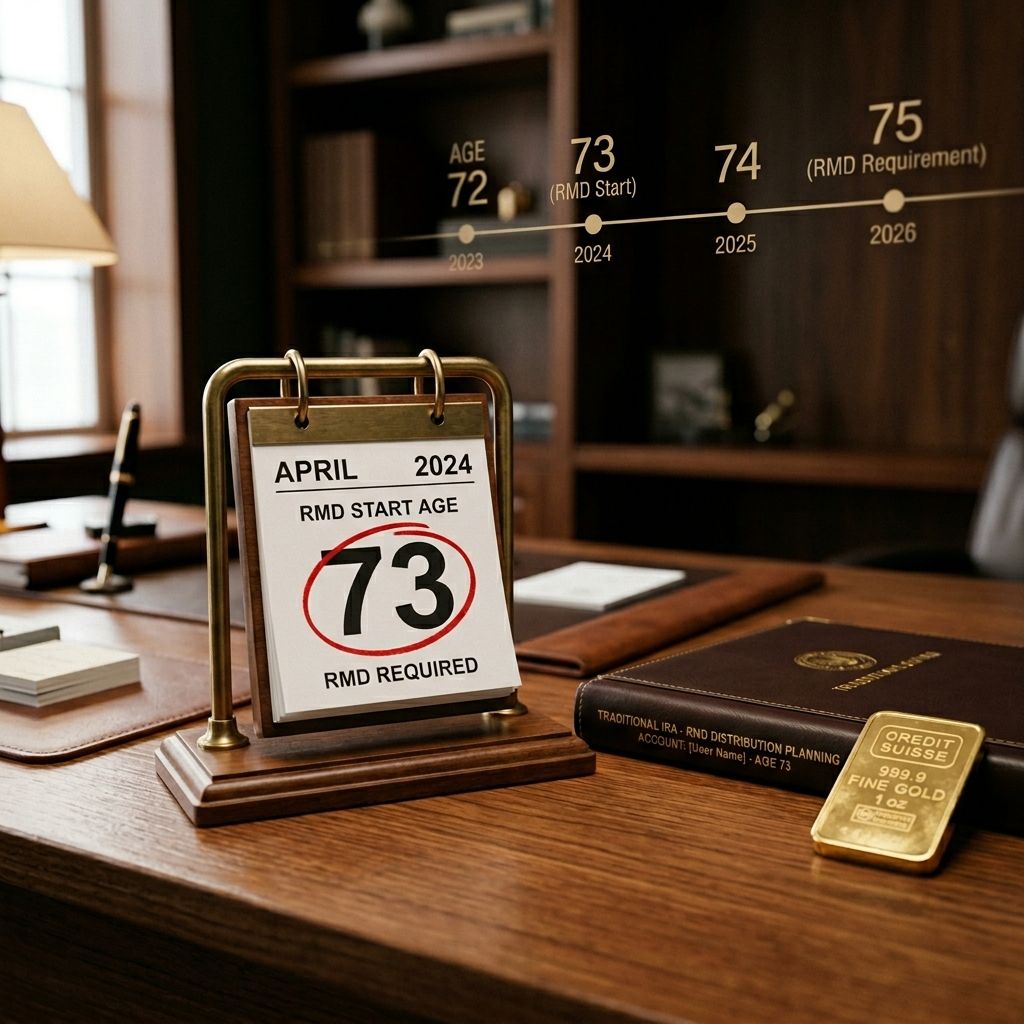
When Do RMDs Begin

When Do RMDs Begin?

Under the SECURE 2.0 Act, RMDs from Traditional IRAs and 401(k)s begin at age 73 for anyone born between 1951 and 1959, and at age 75 for anyone born in 1960 or later.

How RMD Amount Is Calculated

How Is the Amount Calculated?

Your RMD is calculated by dividing your prior year-end account balance by a life expectancy factor from IRS tables. The factor decreases each year, meaning the percentage you must withdraw increases as you age.

Penalty for Missing RMDs

Penalty for Missing RMDs

Failing to take your full RMD results in an excise tax of 25% of the amount not withdrawn (reduced to 10% if corrected within two years). This is one of the steepest penalties in the tax code.
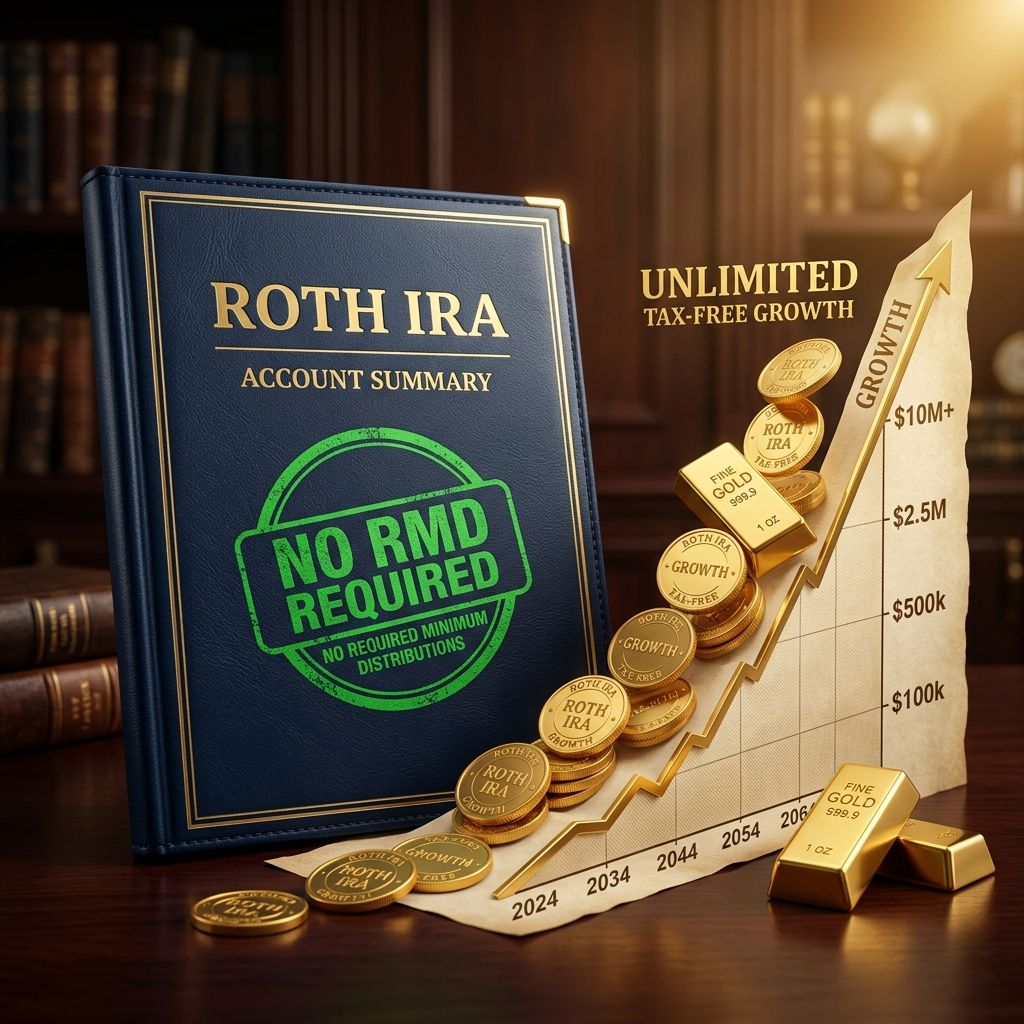
Roth IRAs Are Exempt

Roth IRAs Are Exempt

Roth IRAs have no RMDs during the account owner's lifetime. This is one of the most powerful advantages of a Roth IRA — your money can continue growing tax-free indefinitely.

Gold IRA RMDs

Gold IRA RMDs

A Traditional Gold IRA follows the same RMD rules as a conventional Traditional IRA. You may satisfy your RMD by taking a cash distribution (selling metals) or an in-kind distribution (physical delivery of metals).

First RMD Deadline

First RMD Deadline

Your first RMD must be taken by April 1 of the year after you turn 73 (or 75). All subsequent RMDs must be taken by December 31 each year. Taking two RMDs in one year may push you into a higher tax bracket.

Common Questions

RMD FAQ

Can I take more than my RMD?

Yes. You can always withdraw more than your RMD — the RMD is a minimum, not a maximum. However, any amount above the RMD from a Traditional IRA or 401(k) is still subject to ordinary income tax. Excess withdrawals cannot be applied to future years' RMDs.

Do I have to take an RMD from every account separately?

For Traditional IRAs (including Gold IRAs), you may aggregate the RMDs across all your IRAs and take the total from any one or combination of accounts. However, 401(k) RMDs must be calculated and taken separately from each 401(k) plan — they cannot be aggregated with IRA RMDs.

What is a Qualified Charitable Distribution (QCD)?

If you are age 70½ or older, you can transfer up to $105,000 per year (2026) directly from your IRA to a qualified charity. This Qualified Charitable Distribution counts toward your RMD but is excluded from your taxable income — a powerful strategy for charitably inclined retirees.

How does a Gold IRA handle in-kind RMD distributions?

For a Traditional Gold IRA, you can satisfy your RMD by having physical metals shipped directly to you (an in-kind distribution). The fair market value of the metals on the date of distribution counts as the distribution amount and is included in your taxable income for that year. Your custodian will issue a 1099-R.

Questions About Your Gold IRA RMDs?

Our specialists can walk you through your Gold IRA distribution options — whether you prefer a cash distribution or physical delivery of your metals.