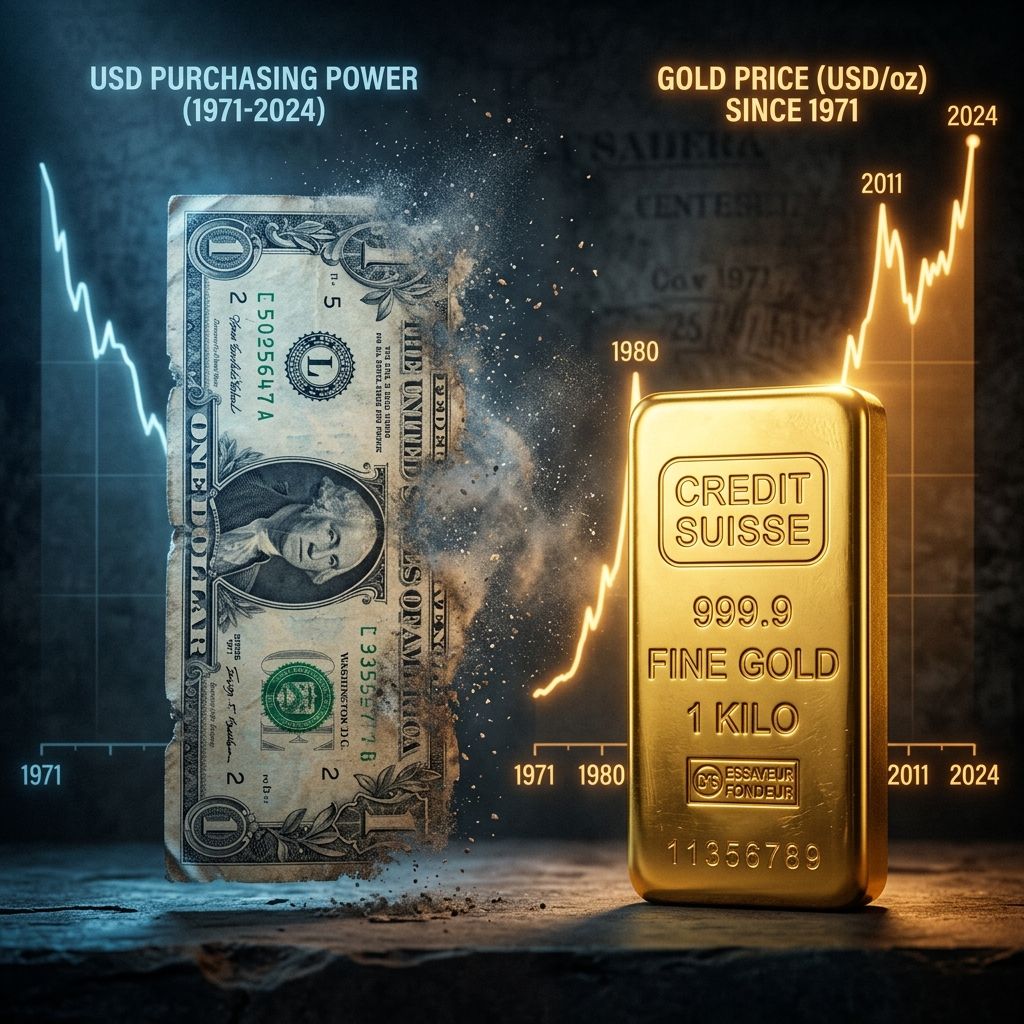
For thousands of years, gold and silver have preserved wealth through wars, recessions, and currency collapses. Here's why millions of Americans are adding precious metals to their retirement strategy today.
Gold has maintained its purchasing power over centuries. An ounce of gold bought a fine Roman toga 2,000 years ago — today it buys a fine suit. Paper currencies, by contrast, consistently lose value over time through inflation.
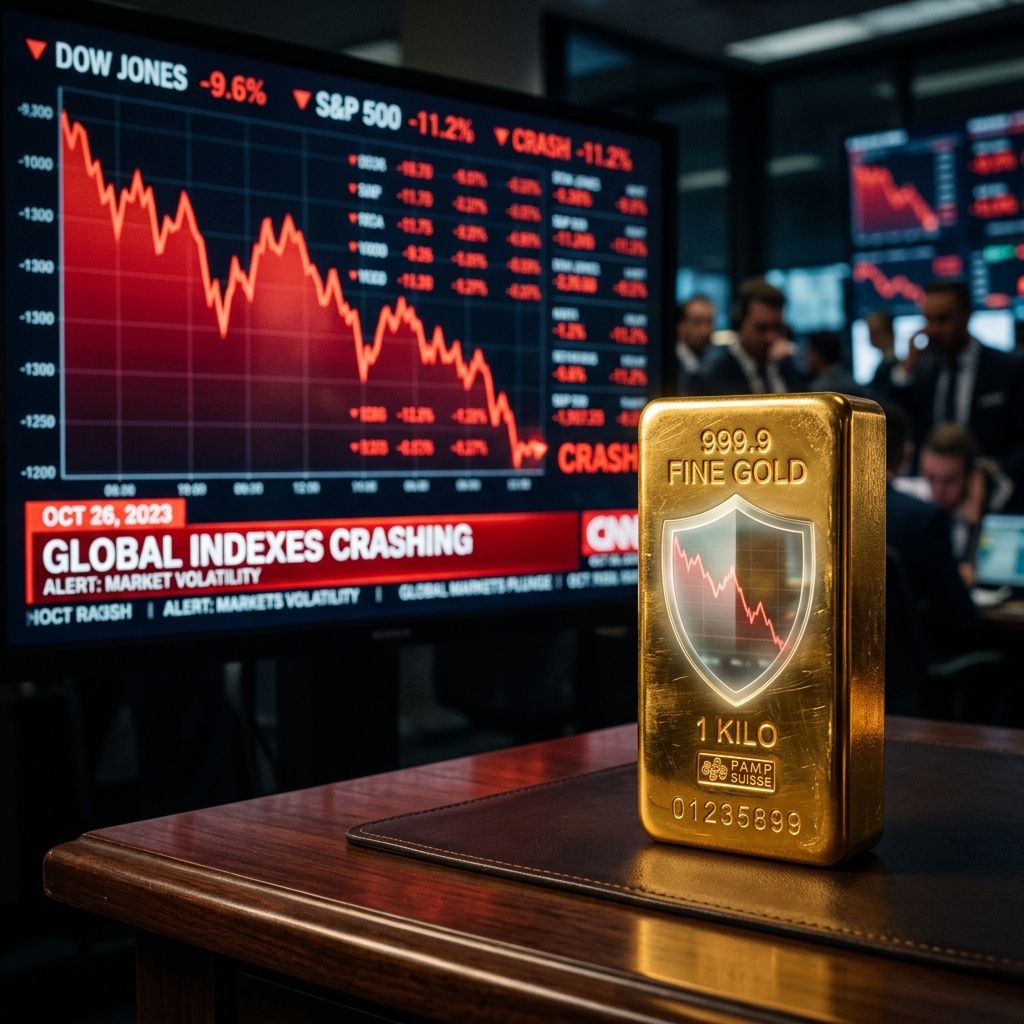
Precious metals historically move independently of — and often inversely to — the stock market. During the 2008 financial crisis, gold rose over 25% while the S&P 500 fell nearly 40%, providing critical portfolio protection.
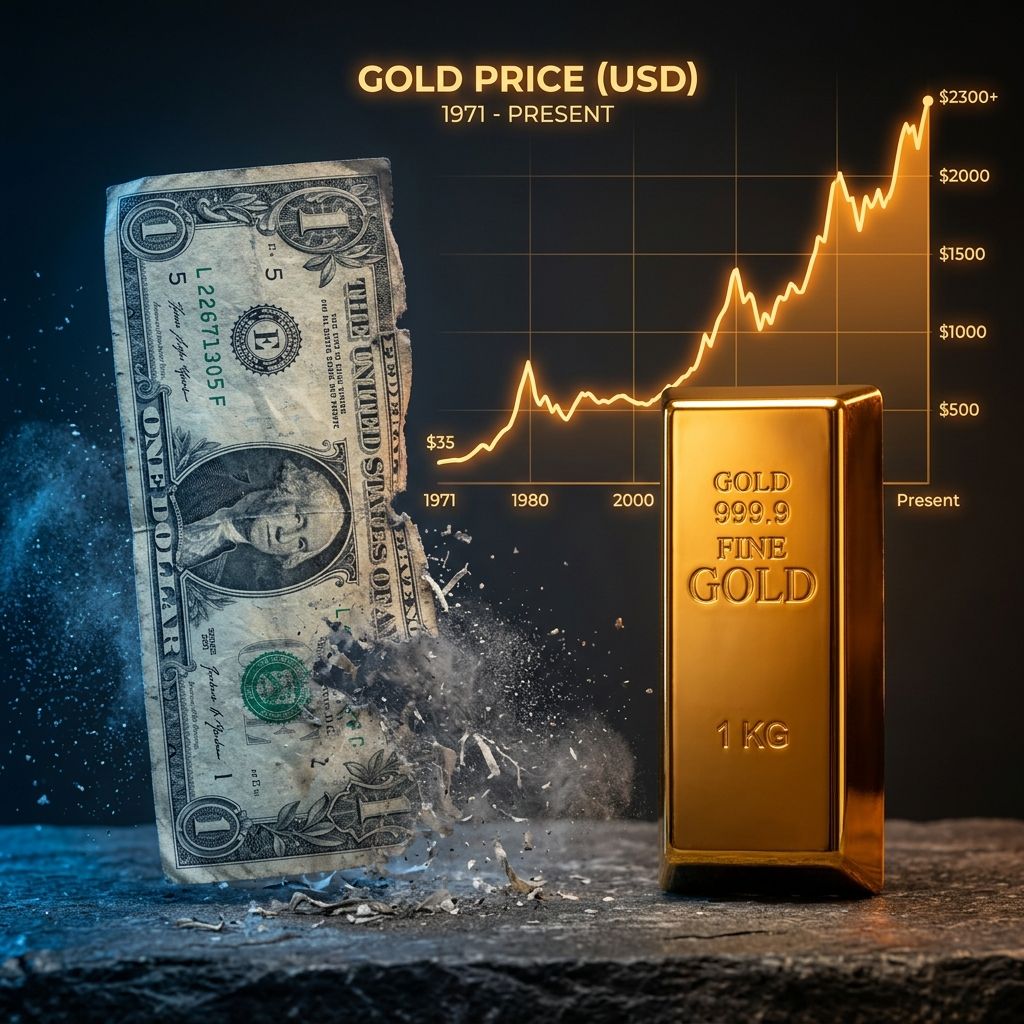
Since 1971, when the U.S. dollar was taken off the gold standard, the dollar has lost over 85% of its purchasing power. Gold priced in dollars has risen over 5,000% in the same period, preserving wealth as currencies are debased.

Physical gold and silver are not anyone else's liability. Unlike stocks, bonds, or bank deposits, precious metals cannot go bankrupt, default, or be diluted. What you own is real, tangible, and fully yours.
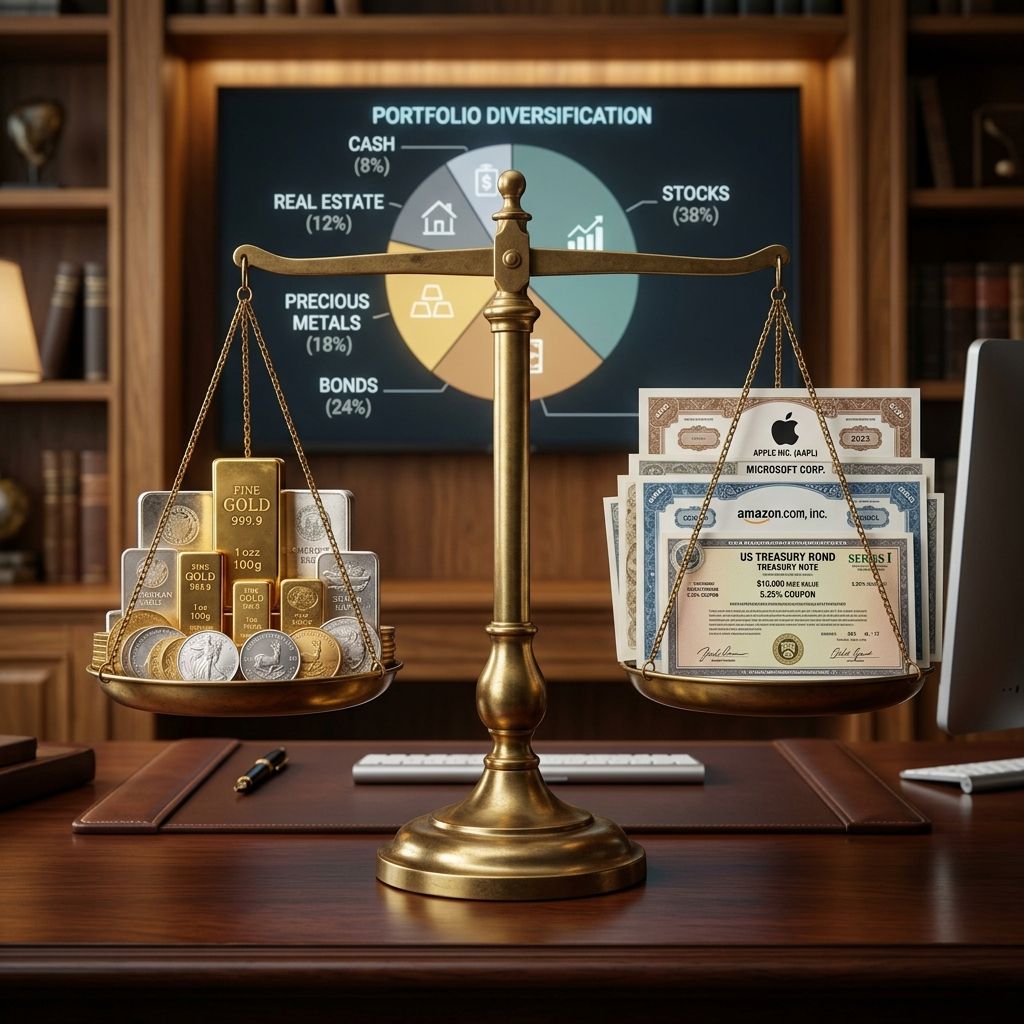
Modern portfolio theory shows that assets with low or negative correlation reduce overall portfolio risk. Precious metals have a historically low correlation to equities and bonds, making them a powerful diversifier.

Gold and silver are universally recognized stores of value across every culture and country on Earth. Central banks hold gold as a reserve asset — in 2023 and 2024, they purchased gold at near-record rates.
In 1971, the U.S. officially ended the dollar's convertibility to gold. Since then, the divergence between paper money and real assets has been dramatic.
$10,000 kept in cash in 1971 has the purchasing power of roughly $1,400 today — a loss of 86%. The same $10,000 invested in gold in 1971 would be worth over $500,000 today.
This isn't a fluke. It reflects the fundamental difference between a finite asset with intrinsic value and a currency that can be printed in unlimited quantities.
Approximate figures for illustrative purposes. Past performance does not guarantee future results.
| Metal | Primary Role | IRA Purity | Best For |
|---|---|---|---|
| Gold | Monetary store of value | 99.5% | Core inflation hedge |
| Silver | Monetary + industrial | 99.9% | Leverage in bull markets |
| Platinum | Industrial + monetary | 99.95% | Long-term rarity play |
| Palladium | Industrial (autocatalysts) | 99.95% | Supply-driven growth |
For most first-time precious metals investors, gold is the right starting point — it's the most liquid, most globally recognized, and most proven store of value. Once you have a gold position, adding silver or platinum can enhance your metals diversification.
Gold's value is not in yield — it's in preservation. Gold's role in a portfolio is similar to insurance: it doesn't earn returns in good times, but it protects against catastrophic losses. Historically, a 5–15% allocation to gold has reduced portfolio volatility while improving risk-adjusted returns over long periods.
Precious metals can be volatile in the short term, but over long horizons they have been reliable stores of value. The key is using them as a diversifier — not as your entire portfolio. Most financial advisors suggest a 5–20% allocation to precious metals, which dampens overall portfolio volatility rather than adding to it.
Central banks around the world — particularly in China, India, Russia, and Poland — have been buying gold at near-record rates. They cite diversification away from the U.S. dollar, geopolitical risk hedging, and the desire to hold reserves in an asset that carries no counterparty risk. Many analysts view central bank buying as a long-term positive signal for gold prices.
Universal Gold Group does not provide market timing advice. What we do advise is that the reasons to own precious metals — inflation, currency risk, geopolitical uncertainty, and portfolio diversification — are structural and ongoing. Many of our clients use a dollar-cost averaging approach, adding to their metals position gradually over time rather than trying to time the market.